Hollowpine / The stay
Heat, cold,
then nothing
What a stay here actually consists of, hour by hour, and what the land does while you are in it.
The round, in full
Ninety minutes
you will think
about later.
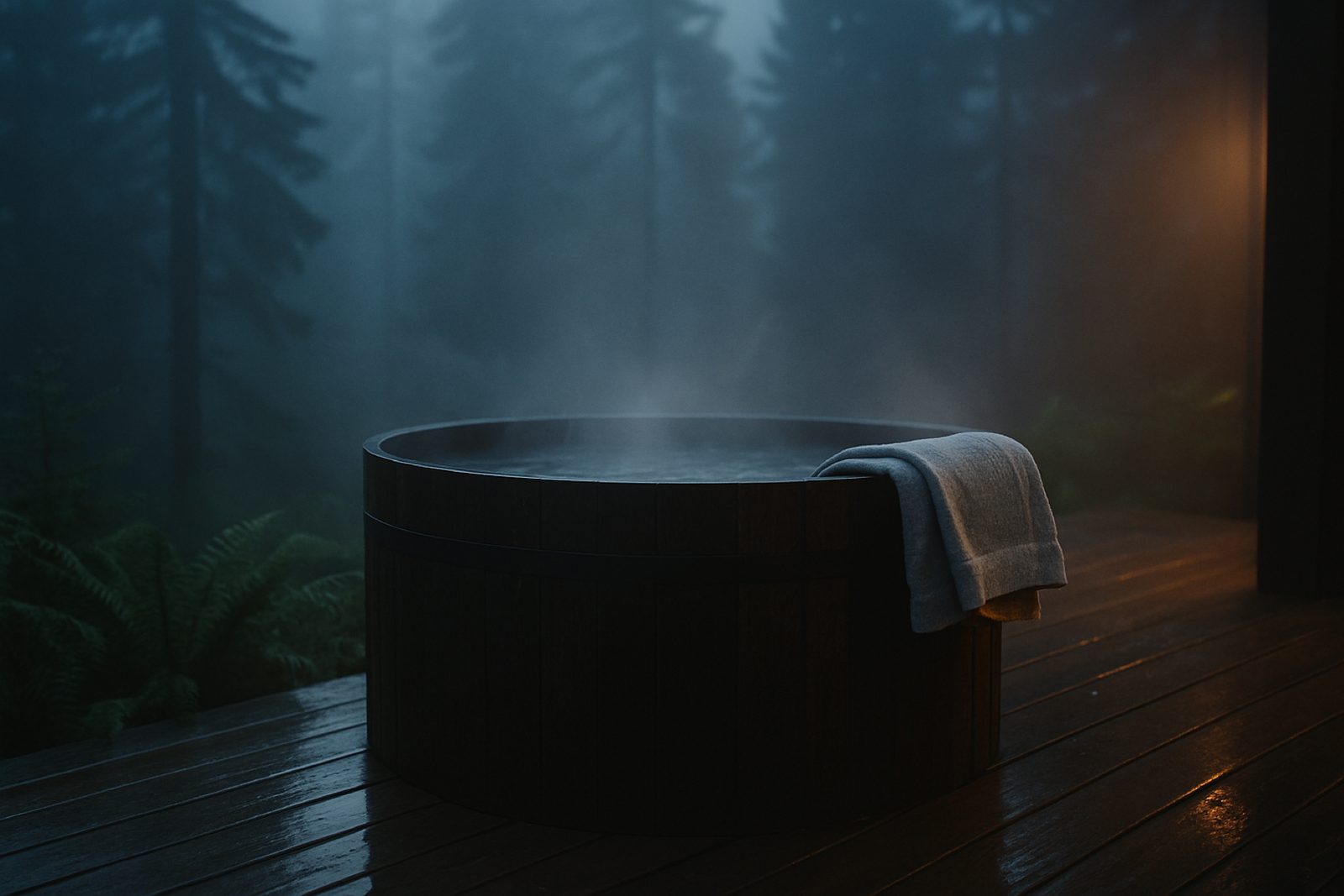
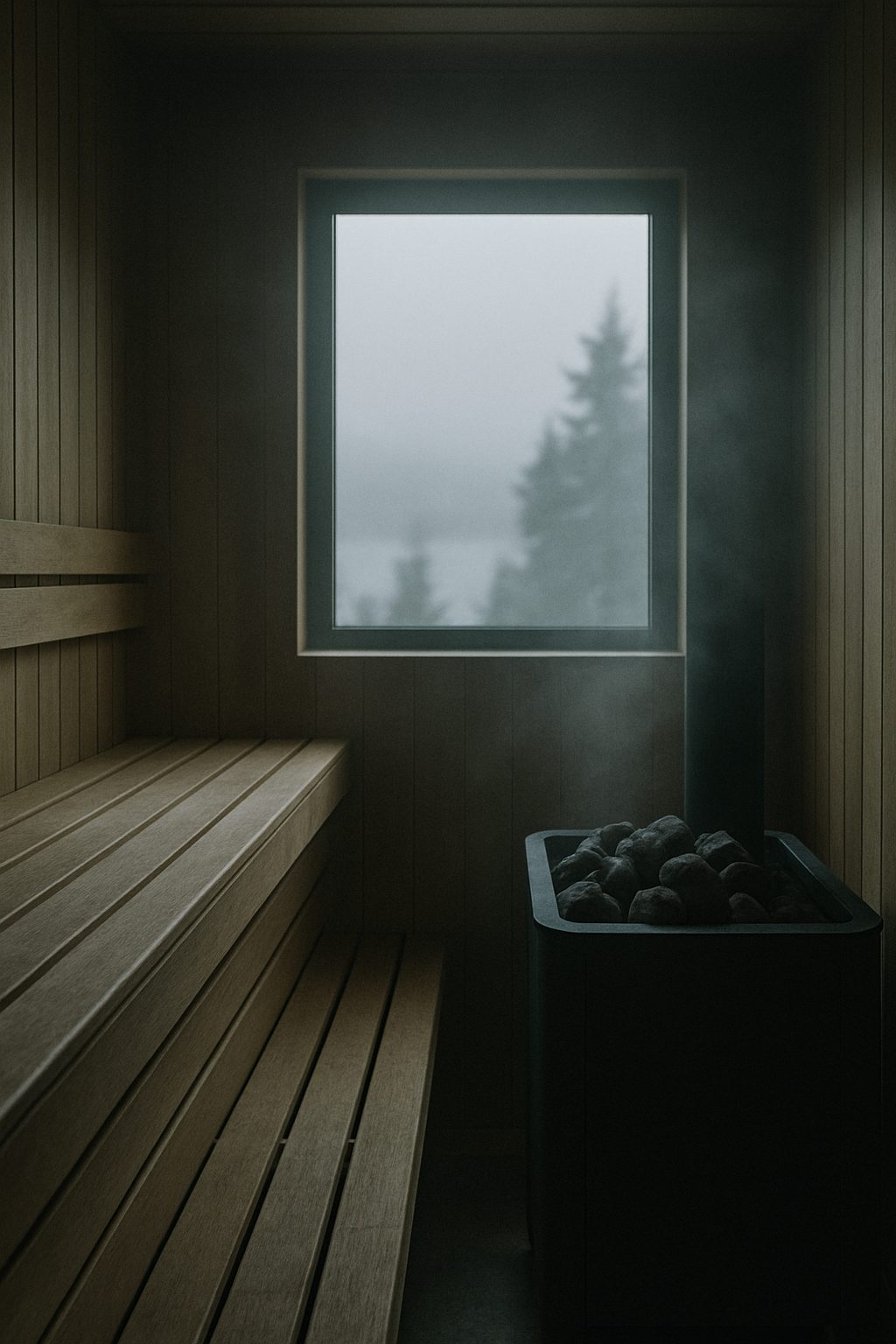
Every cabin has its own wood-fired cedar sauna and its own plunge. Nothing is shared and nothing is booked. Tobias detailed the benches an inch lower than standard, so you sit deeper and the heat sits higher — which is the difference between enduring a sauna and enjoying one.
- 01
Light it early
The stove takes fifty minutes to bring the room to 82 °C. Start it before you cook, not after. Split alder is in the rack by the door and there is a second rack under the eave that stays dry in any weather.
- 02
First heat
Fifteen to twenty minutes on the upper bench. Ladle water over the stones twice, not more; the point is heat, not spectacle. When you notice you are counting, you are done.
- 03
Plunge
Creek-fed and held between 4 and 8 °C all year. Walk, do not run. Go in on an exhale and keep breathing slowly — the gasp is a reflex and it passes in about eight seconds. Come out slightly before you want to.
- 04
Rest, outside
A bench under the eave, a wool blanket, nothing to look at but weather. This is the part people skip and it is the part that does the work. Do not go back indoors and do not check your phone.
- 05
Twice more
Three rounds is the usual count. The second is the best one. The third runs past dark, when the fog closes the ridge and the only sound left is the creek and the stove ticking as it cools.
- 06
Do not
Drink alcohol between rounds. Stay in past twenty-five minutes. Plunge alone on your first night. Or shower afterwards — you will undo the whole thing.

A day, roughly
There is not
much to it.
No schedule, no activities board, nobody knocking. This is what most guests end up doing anyway, in more or less this order.
Arrive
Your door code works from noon. Park at the shed; the walk in runs between forty and three hundred feet depending on the cabin, and there is a cart with good wheels.
Light the stove
Kindling and firestarters are in the copper bucket. The room is warm in about twenty minutes and stays warm on one reload overnight.
Start the sauna
Before you cook, not after. Fifty minutes to temperature.
Eat
Whatever you brought. Full kitchen, decent knives, a table for four and a window doing most of the work. The market in Nehalem is nine minutes and closes at eight.
First round
Heat, plunge, rest. Then twice more. Most people are asleep by half past eleven without meaning to be.
Dark
There is no light pollution out here and, on most nights, no visible sky either. The fog takes it. That turns out to be its own kind of thing.
The creek
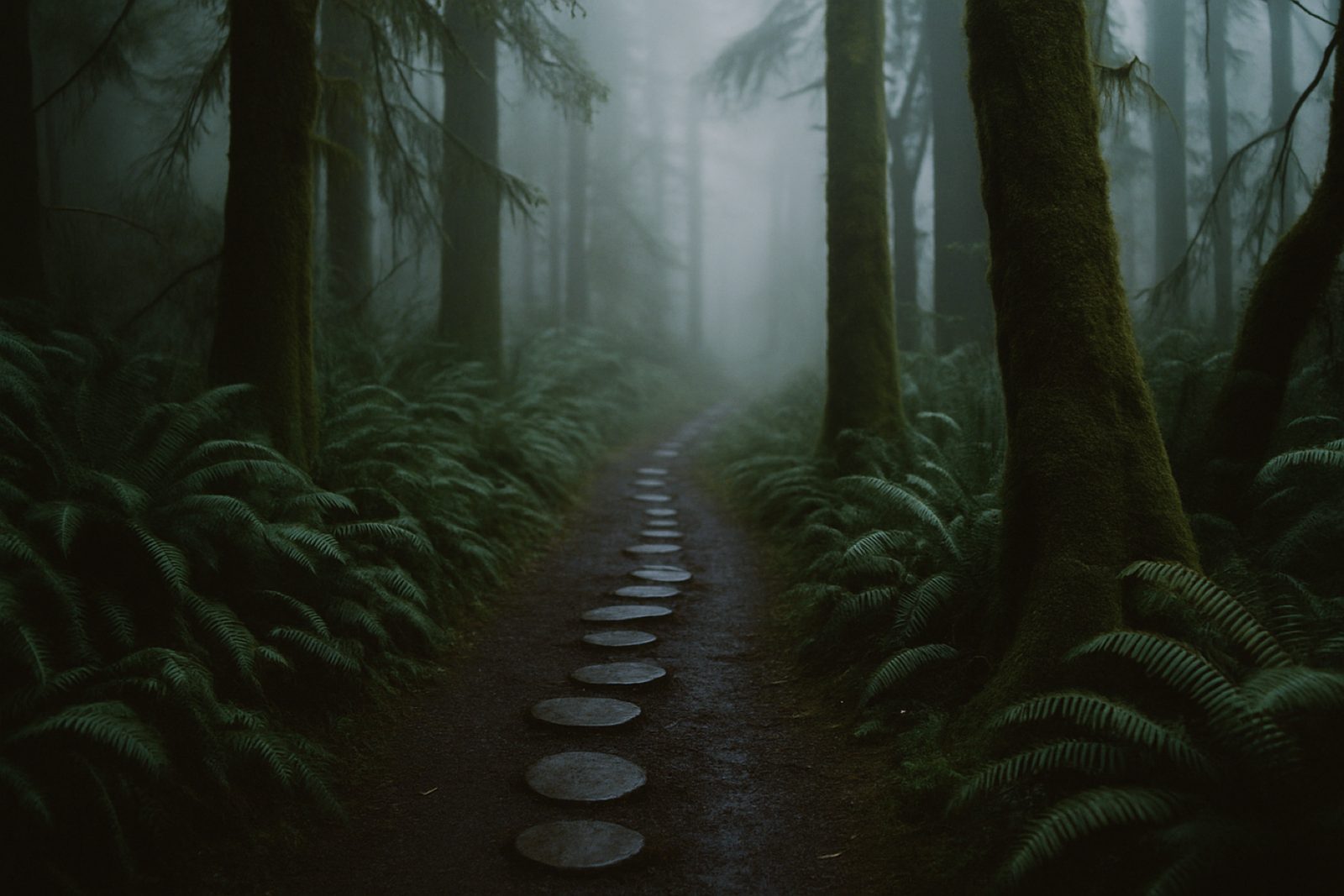
Half a mile down and back before coffee. The trail is marked with cedar rounds set flush into the mud, and it is walkable in any shoe we have tested.
Thirty-eight acres
The land is
second-growth
and honest about it.
This was logged in 1961 and again in 1988. What came back is hemlock, alder, salal and a great deal of moss, and in twenty years it will be genuinely beautiful. We have put in two miles of trail, taken out eleven acres of Himalayan blackberry, and replanted cedar along the creek where it belongs.
What is out there
- Roosevelt elk cross the lower meadow most winter evenings, usually between four and five.
- Chanterelles on the east bank from mid-October. We will show you where; we will not put it on a map.
- Coho run the creek in late November when the water is high enough. Some years they do not.
- Two miles of marked trail, plus an unmarked one up the ridge that we will describe if you ask.
- Nehalem Bay and eleven miles of beach, eighteen minutes away by car.
Rain, honestly
We get about ninety inches a year and most of it between October and March. Nobody has ever written to complain about it, but it is worth knowing before you book a February weekend: you will not be sitting outside in the afternoon, and you will not want to.
There are rain shells and boots in the entry of every cabin, sizes 5 to 13, and a drying rack over the stove that works better than it has any right to.
Season by season
Four different
places, really.
People ask which month is best. The honest answer is that they are not the same product, and the one you want depends on what you are here to do.
Winter
The creek is at its loudest and the fog rarely lifts before eleven. Elk in the lower meadow most evenings. Best sauna month by a wide margin, and the cheapest.
Spring
Trillium first, then salmonberry. The road dries out in April. The longest run of usable evening light on the ridge, and the fewest people on the beach.
Summer
August is the warm month and it still drops to 11 °C at night. Book a creek cabin; they run four or five degrees cooler than the ridge.
Autumn
Chanterelles from mid-October. The first real storms arrive in November and they are worth staying up for. Our own favourite month is the last one.
In all nine
What is already
in the cabin.
Bring food, a book and something warm. Everything on this list is there when you open the door, and it is restocked between every stay.
- Private wood-fired cedar sauna, six-person bench, stones replaced yearly
- Creek-fed cold plunge, held at 4–8 °C all year
- A full rack of split alder, and a second one under the eave that stays dry
- Full kitchen: induction hob, oven, French press, knives that are actually sharp
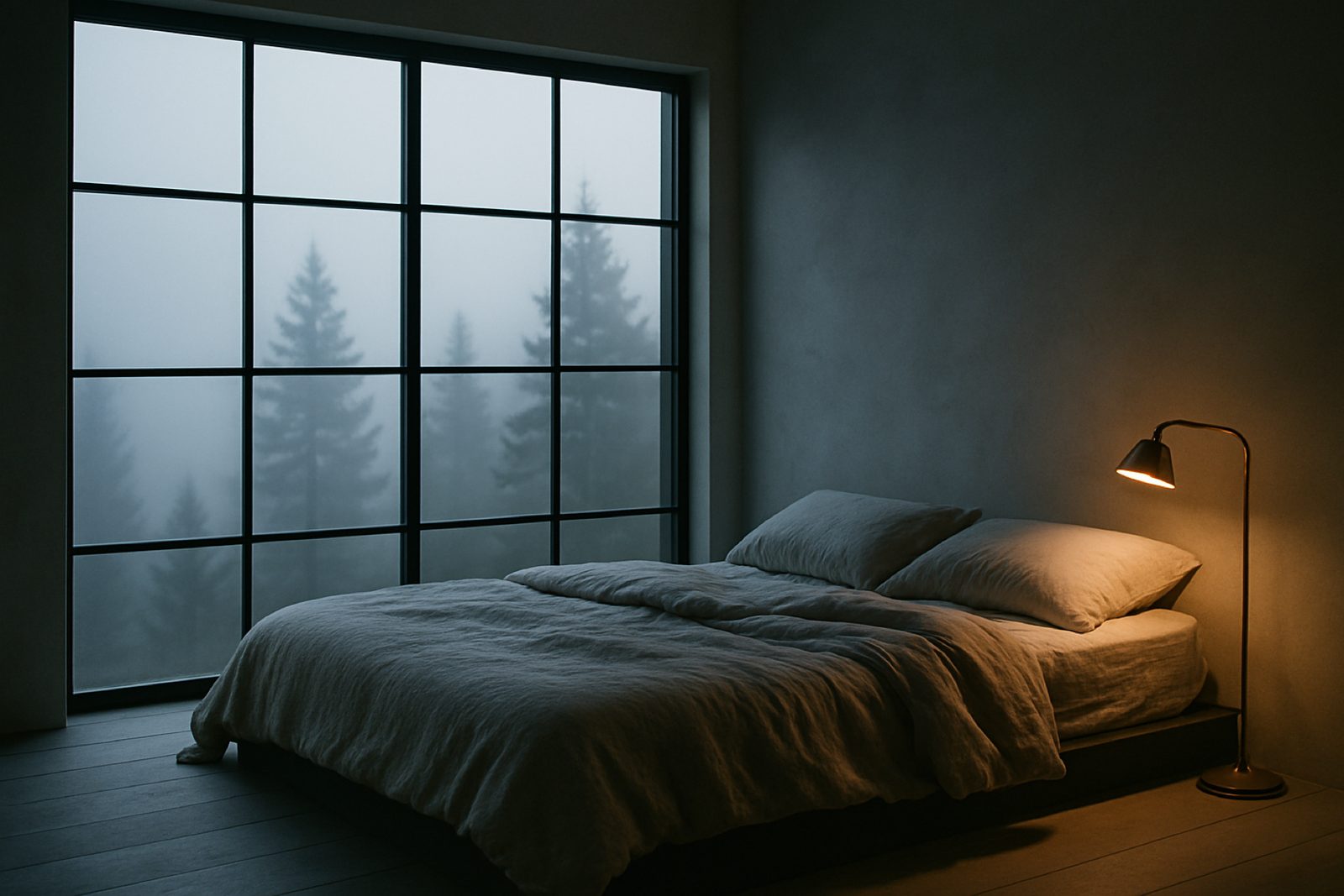
- Belgian linen, wool blankets, and one spare set of each in the press
- Radiant floor heat in the bathroom, on a timer you can change
- Hot water that does not run out halfway through the second shower
- Fast wifi. No television in any of the nine, and we will not be adding one.
- Coffee from Coava, salt, olive oil and a dozen eggs from the farm on Foss Road
- Rain shells and boots in the entry, sizes 5 to 13
- A marked topographic map of the property, drawn by Tobias and mostly accurate
- A landline on the wall that reaches one of us at any hour of the night

Two-night minimum